




For microgreens and sprouts growers
Grow plans to sowings to subscriber flats, scored against each client's nutrition targets.
Sign in to CotyledonEmber OS · Cotyledon
Ember OS runs your entire business, organizes your people and delivers sustainability reports, side by side.

Grow plans to sowings to subscriber flats, scored against each client's nutrition targets.
Sign in to CotyledonThe food ecosystem
Organic and heirloom seed, every lot traced to its supplier
Growing media, nutrients and light, costed per tray
Sowings, stages and harvests on a living calendar
Orders, deliveries, subscriptions and the people being fed
What we stand for
Every figure shows where it came from: sourced, stated, derived or placeholder. A placeholder never looks like a real number.
Energy, water, waste, refrigerants and supplier footprint are measured in the same system that runs production, not in a spreadsheet off to the side.
Food is judged by what it does for the body. Cotyledon scores every flat against a client's nutrition targets, and each benefit cites its research source.
The kitchen is where people gather. Ember OS includes customer, supplier and staff portals to bring your people into the system, with their orders, invoices and choices in one place.
Engines and modules
Now you can manage every slice of your business from one system, including sustainability measured from your own recipes and your own facility.
Plans, batches or sowings, schedules, capacity and time studies, from one plan of record.
Double-entry ledger, US GAAP perpetual inventory at actual cost, P&L, balance sheet and cash flow.
True cost per unit and cost to serve, built from tagged inputs.
Scope 1, 2 and 3 emissions, energy, water, waste, refrigerants and supplier life-cycle data.
Procurement, purchase orders and a supplier directory with what each supplies.
FIFO lots and full traceability; HACCP control points or the Produce Safety Rule.
Staffing, schedules against labor demand, SOPs and training.
Sales portal, prospects, customers and subscribers, orders.
Customer, client, supplier and family portals, each in its own space.
Invoicing, receivables and payables, and subscriptions billed through Stripe.
Before you commit
Save as many forecasts as you need. One is the plan of record you report against. Open any other and every page, from the schedule to the P&L, runs under it.
One day under two forecasts, or two flats side by side, each under its own grow plan and logistics: cost, labor, resources, footprint and the management figures, with every difference listed.
How the engine thinks
A batch or a sowing is generated by orders coming in. All activities are combined per cycle. Resource allocation is mapped across your entire business.
Every input line on a recipe or grow plan is priced from tagged reference data, so cost per unit is computed, never typed in.
Plans and forecasts live in their own world. The ledger moves when a batch closes, a receipt lands or a delivery is handed over.
Sourced, stated, derived, placeholder, unconfirmed or dated. A placeholder looks different everywhere it appears.
Save as many forecasts as you need, and every page runs under the one that is open. One of them is the plan of record, the one the business reports against, and a past month is read against the plan that was in force when it closed.
Inside the apps
Modules
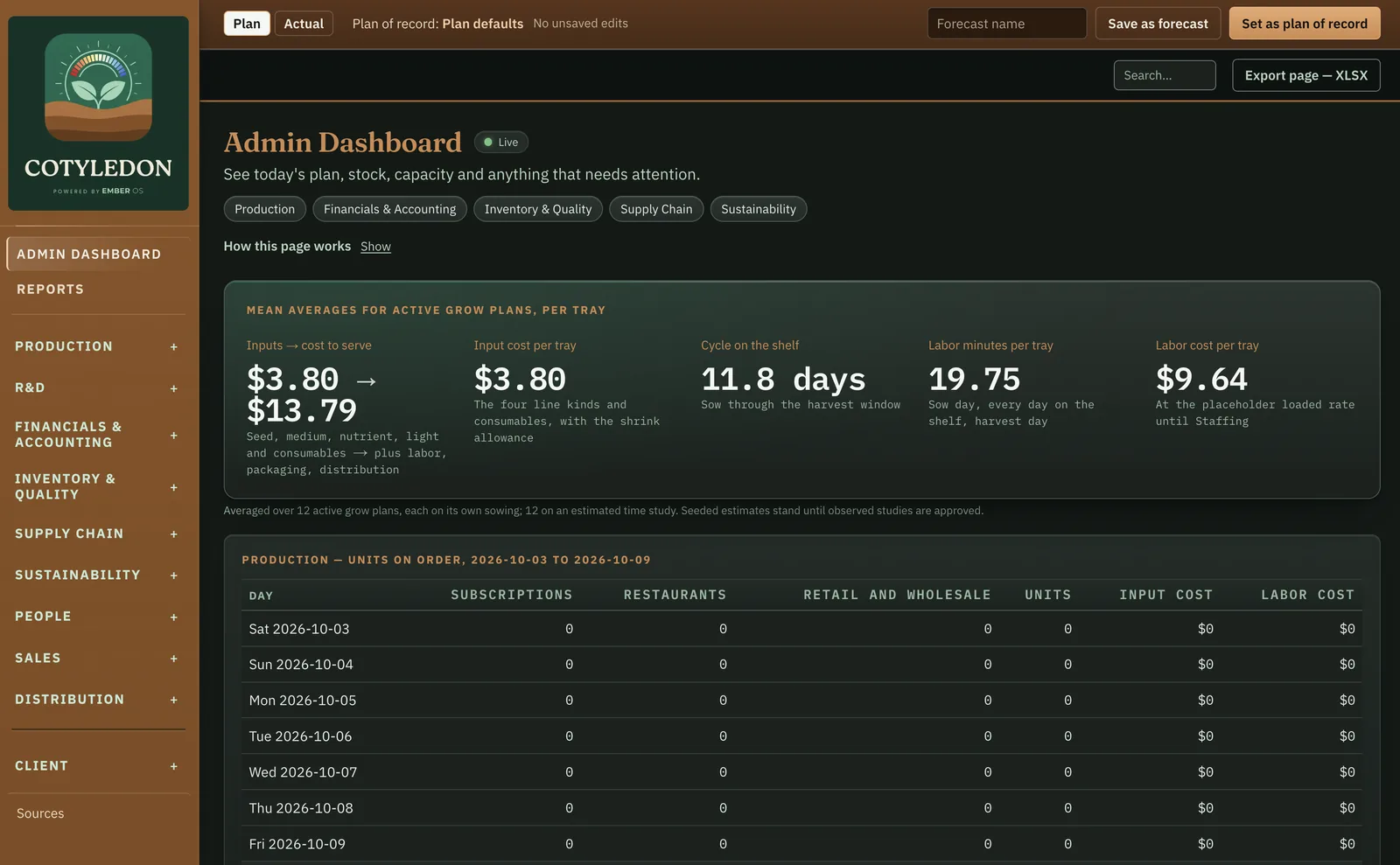
See the whole operation at a glance.
one card per section with its key figures; operators see their own view without company financials
exports across every module
the register of every source a figure cites
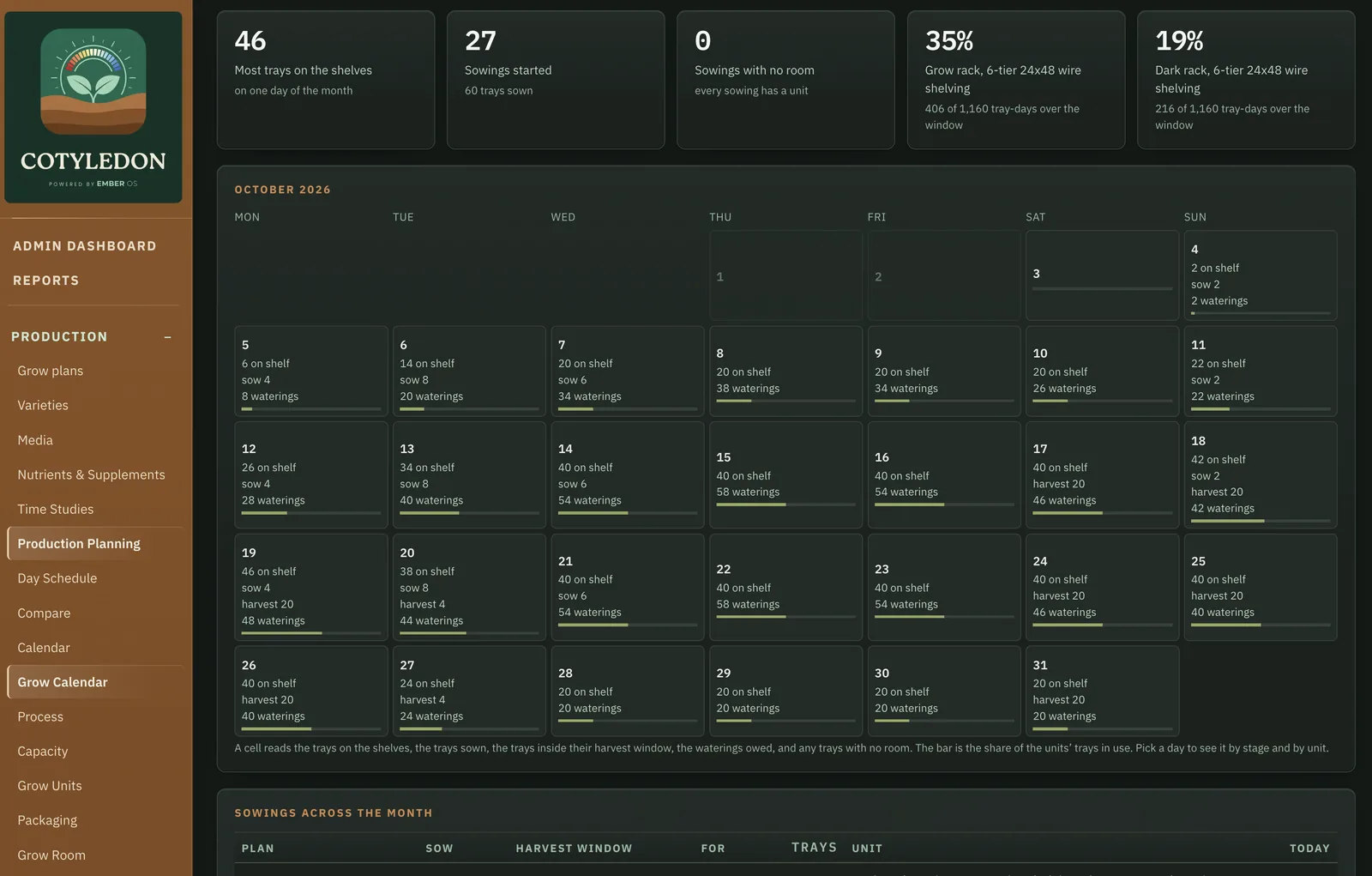
Turn orders into a real production schedule.
every input line costed: seed, medium, nutrients and light
the libraries a grow plan draws on, each with price history
labor standards from timed observations, not guesses
plan one run, one delivery day or a whole period; the day on the clock, the labor it demands, and the month on a calendar
save as many as you need; one is the plan of record, and a saved forecast can be forked
one day under two forecasts, or two flats side by side under different grow plans and logistics, in cost, labor, resources, footprint and management figures
every sowing's stages across the days, planned back from distribution day
what the room can hold, and where a plan runs out of space
the operator’s surface: punch clock, stage records, closing a sowing
Books a CPA would sign.
cost per unit and cost to serve, line by line
statements from the ledger, never from a separate spreadsheet
double-entry, with perpetual inventory at actual cost under US GAAP (ASC 330)
what was planned against what happened
who owes, who is owed
equipment, loans and the money that built the place
Know every lot, from receipt to the plate or flat.
FIFO lots at the price paid
the Produce Safety Rule, sprouts Subpart M and lot traceability
Buy well and know who you buy from.
purchase orders at each supplier's published price
the directory: who they are, what they supply, and at what price
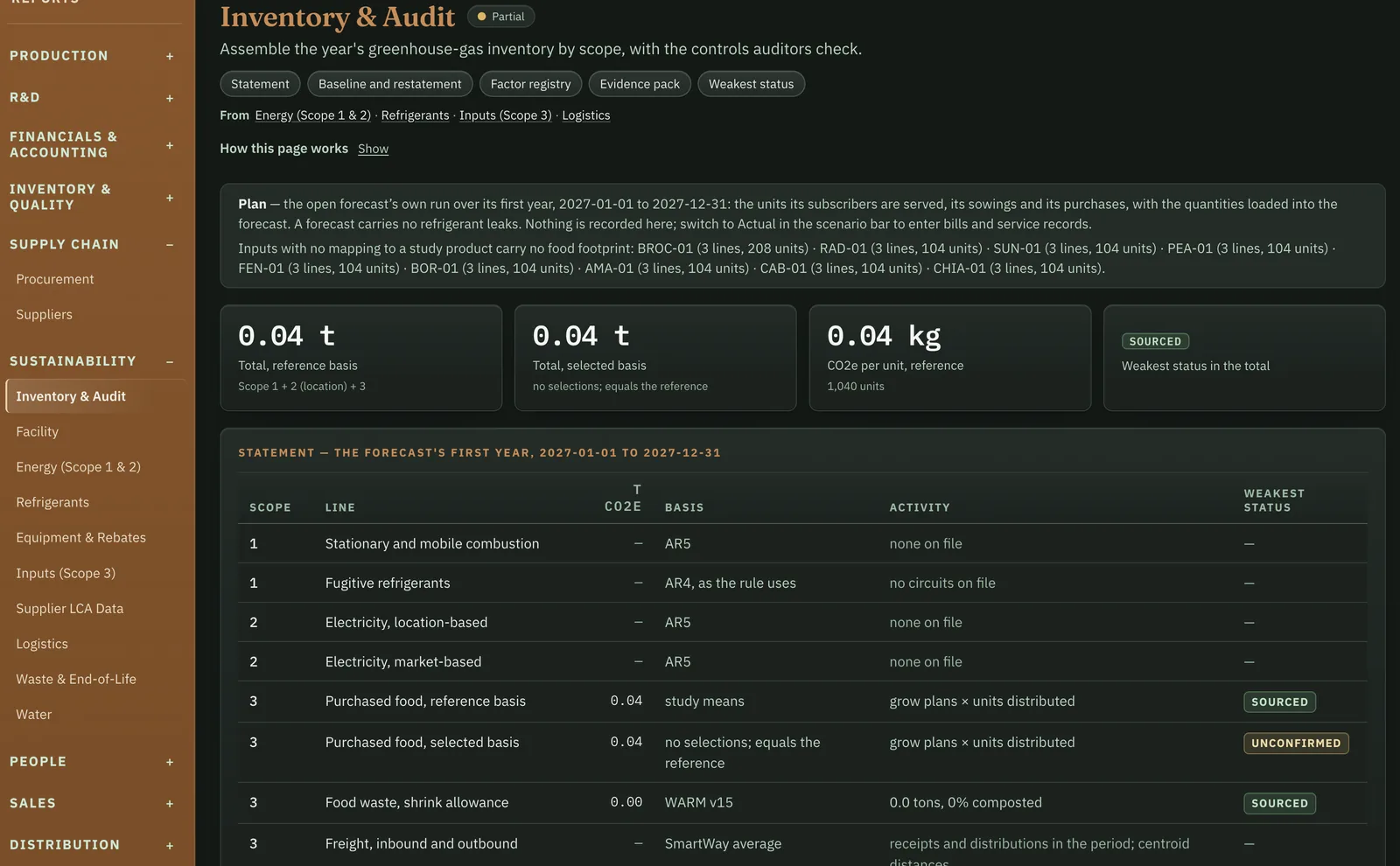
Measure the footprint beside the work that made it.
the emissions inventory and its audit trail
Scope 1 and 2, from the bills and service records
efficiency upgrades and the rebates they earn
Scope 3, from what you buy
life-cycle data from the suppliers that publish it
delivery miles, end of life and effluent
Staff the plan, not the other way round.
roster, roles, wages, punches and pay periods
the roster against the labor the plan demands, with gaps shown
the procedures and who is trained on them
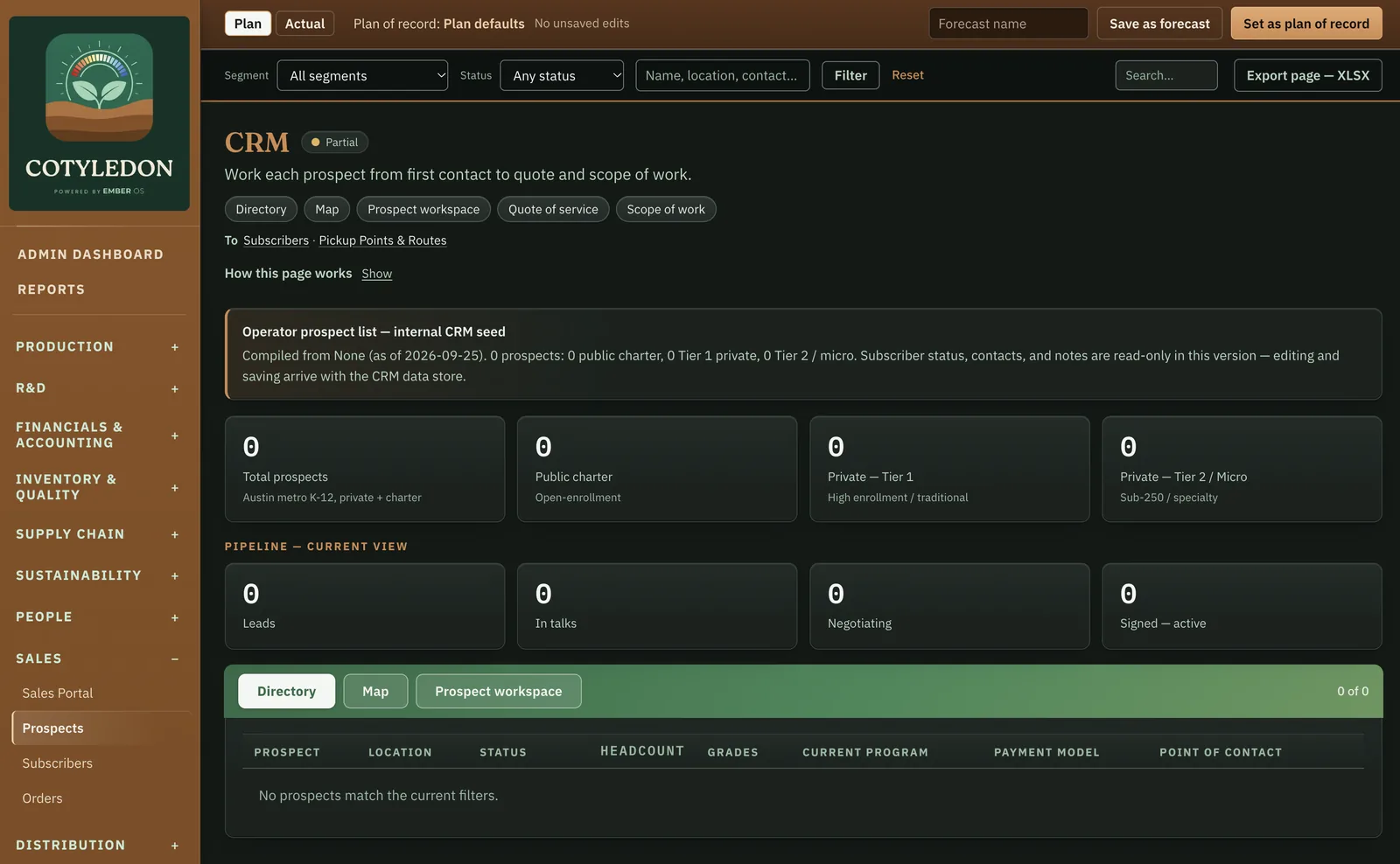
From first conversation to standing order.
the seller's own space
the pipeline, mapped
every account with its pickup points or delivery sites
confirmed and delivered, ready for production
weekly, every-two-weeks or monthly, with skip and pause
each client's targets, scored against what they receive
Each person gets their own door.
clients compose their flats against their own nutrition targets
where the flats go, and the trays that come back
every order invoiced from the ledger
each distribution billed when it is handed over; a skipped one bills nothing
new blends grown as titled experiments, yield read across runs, expensed as R&D under ASC 730 until proven
each business is its own workspace, isolated in the database, with its own members and roles
Transparency
Open any figure in Ember OS and it tells you where it came from. A seed price carries its supplier and the receipt it was paid on. A labor minute carries the time study it was timed in. A number still waiting on real data says so, in a different color, until the real one replaces it.
Grow plan · Broccoli, 10 × 20 tray
Supplier price list, received 14 Sep 2026 · receipt #4120
Time study TS-07, three timed observations
Awaiting the first utility bill
The Local Pulse · peer-to-peer intelligence network
The Local Pulse shows how your kitchen KPIs and sustainability numbers stack up against your Local Group of peer operators with businesses like yours. Your data is anonymous and sharing is opt-in by each metric. What you share is what you can see in the Group.
When a number is not where you want it, the built-in peer network finds an operator in your Local Group who has already achieved your goal and connects you privately with a qualified Sharer. Nothing is published, and no one sees a ranking.
“This is for the chefs, farmers, cooks, bakers, caterers and community kitchens who believe food can heal people and the places we call home.”